Net Revenue Retention, Lifecycle & Customer Experience
Net Revenue Retention is the single largest valuation lever in B2B SaaS. McKinsey's 2025 research showed top-quartile NRR companies (113%+) trade at 24x EV/Revenue while bottom-quartile (98%) sit at 5x — a 5x valuation spread driven by retention math alone. This section breaks down the mechanics: the 9 practices behind 120%+ NRR companies, the lifecycle marketing that operationalizes them, and the buyer psychology that determines whether your existing customers stay in your initial consideration set when they re-evaluate. The plays here are not customer success theater — they're the lifecycle email, expansion targeting, and experience design that compounds the asset you already paid CAC to acquire. Start with the NRR Advantage piece for the strategic frame; the lifecycle and consideration-set pieces show the execution layer.
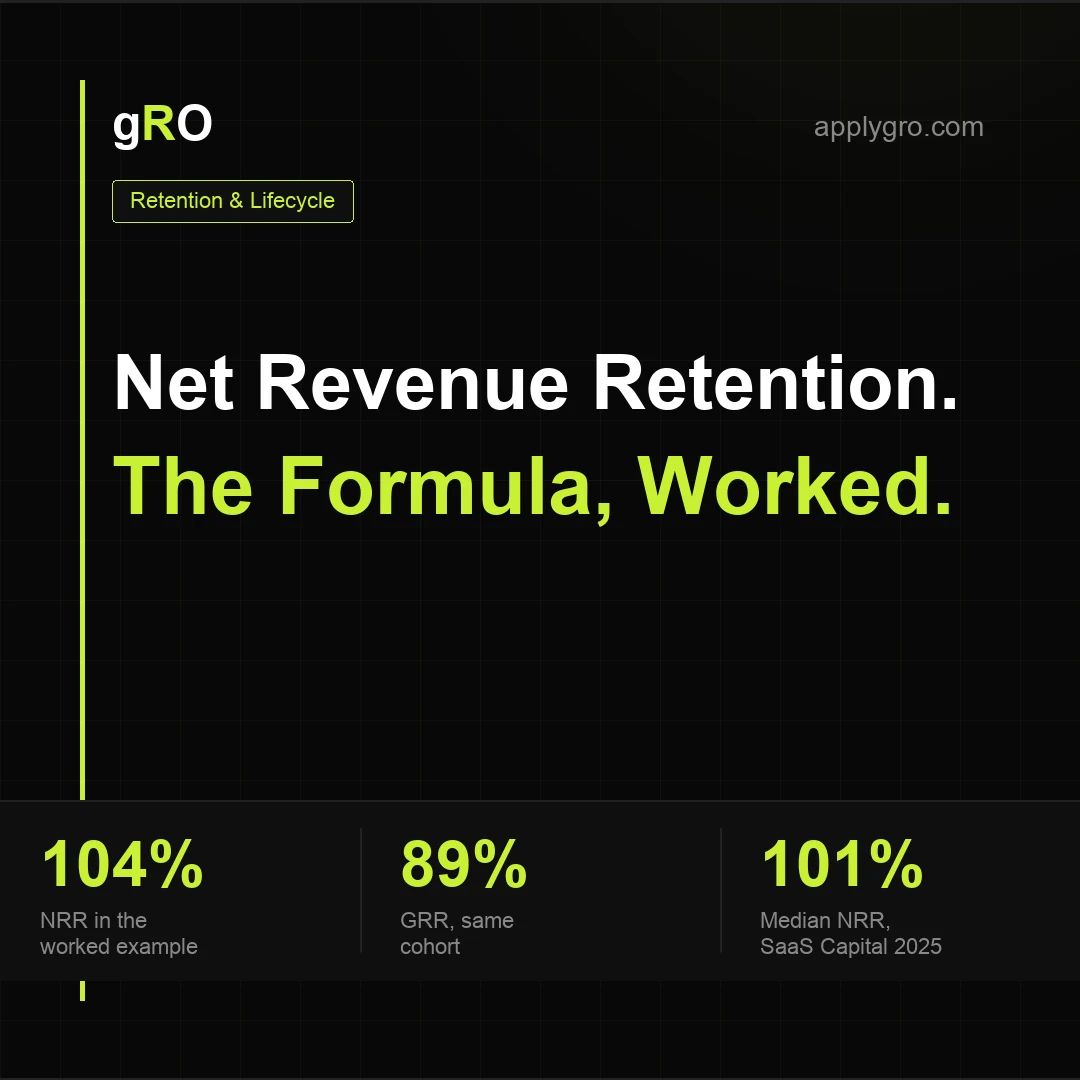
Net Revenue Retention: What It Means and How to Calculate It.
NRR is the share of a cohort's starting recurring revenue still there a year later, with expansion added and new customers left out. The formula, a worked example, the four errors that inflate it, 2025 benchmarks by ARR band, and a calculator.
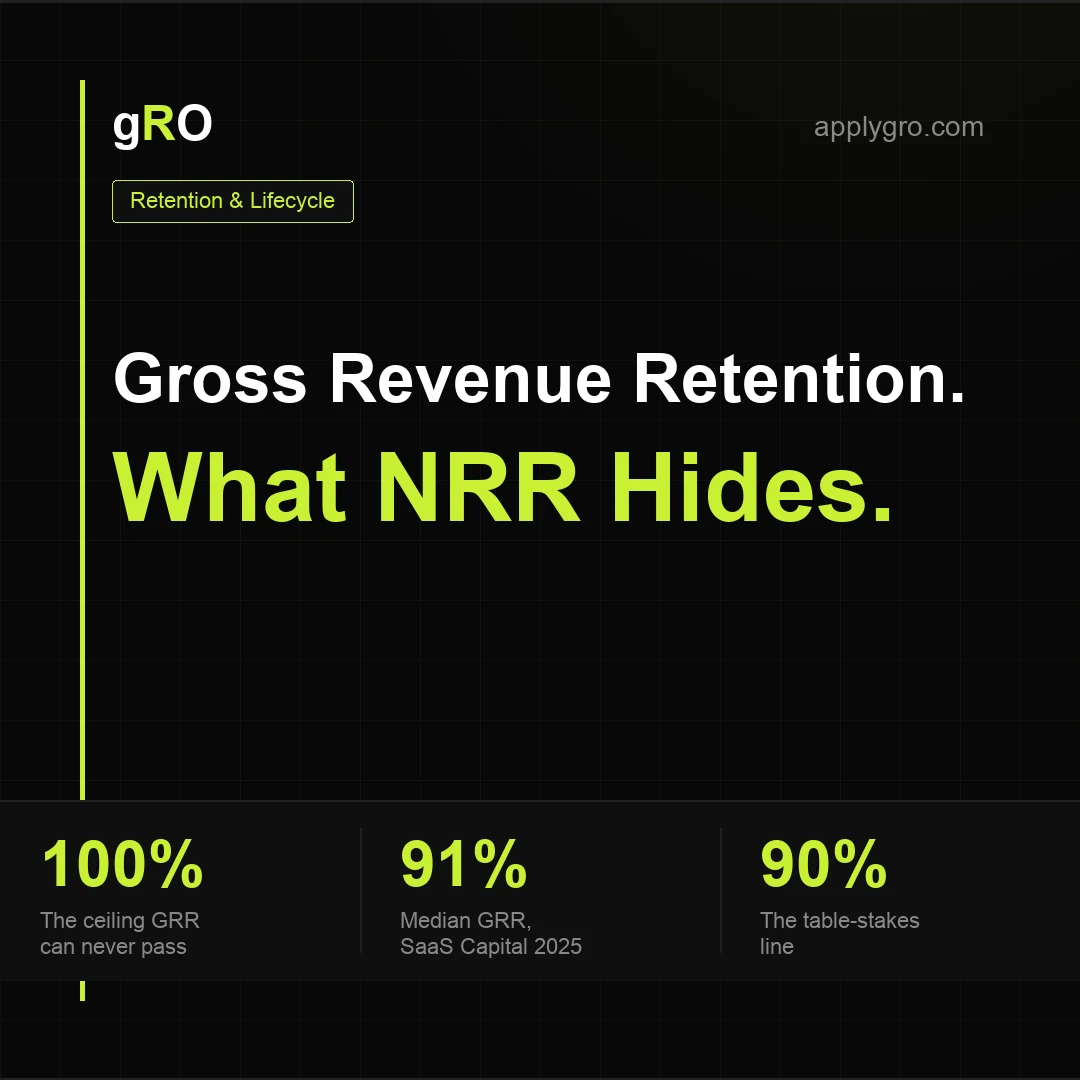
Gross Revenue Retention: The Formula, and What It Shows That NRR Hides.
GRR is the share of starting revenue kept after downgrades and churn, with expansion left out, so it can never pass 100%. The formula, a worked example, GRR vs NRR side by side, 2025 benchmarks, and the four things that drag it down.

A Customer Journey Map That Changes What You Ship Next Week
Six columns, one day, and evidence pulled before anyone opens a whiteboard. Most maps die because they cover every customer type at once, run on assumptions, and give no gap an owner.
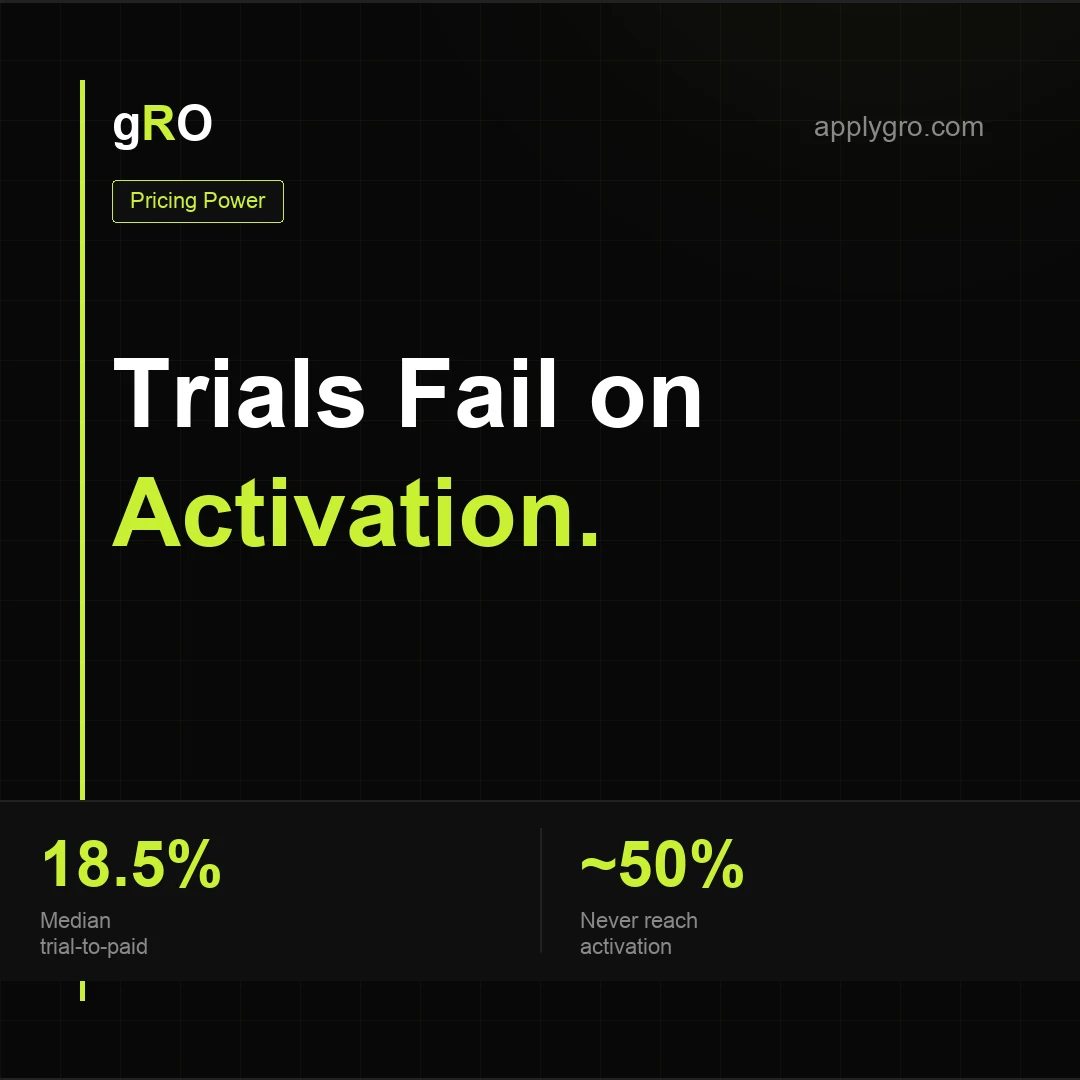
Your Free Trial Doesn't Fail on the Product.
Median B2B SaaS converts ~18.5% of trials, and ~half of trial users never reach activation. Why onboarding — not the product — decides trial conversion.
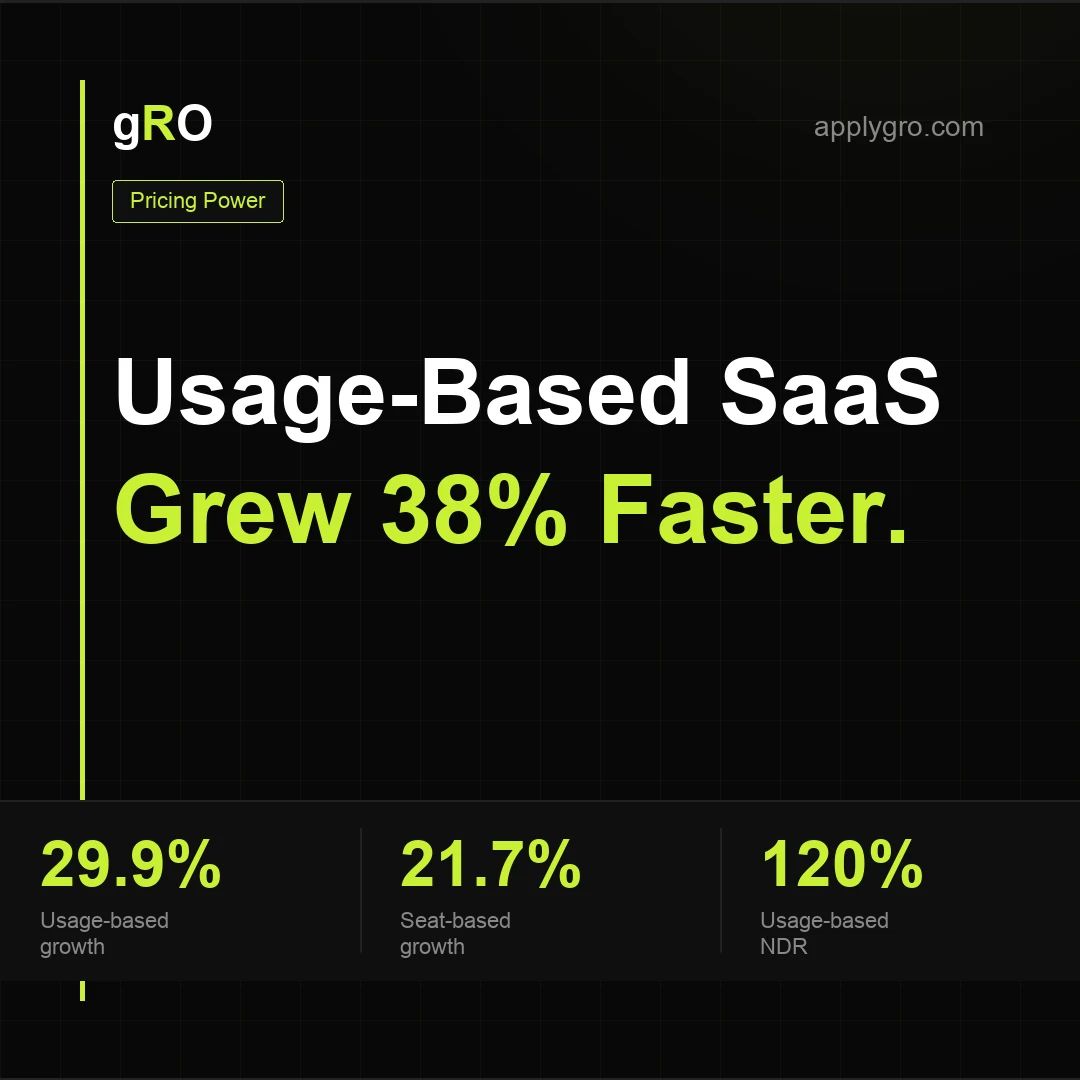
Usage-Based SaaS Grew 38% Faster.
Across ~600 SaaS companies, usage-based pricers grew 29.9% a year vs 21.7% for seat-based, with ~120% vs ~110% NDR (OpenView). Why pricing model caps your growth.

The Activation Gap.
In a typical SaaS base, up to 80% of signed-up users are inactive. Reactivating them is cheaper than acquisition — how to close the activation gap with lifecycle, not ad spend.

Retention Economics.
Replacing one churned customer can take three new ones, and 80% of the best companies' growth comes from existing customers (McKinsey). The retention math most $1M–$10M ARR founders ignore.
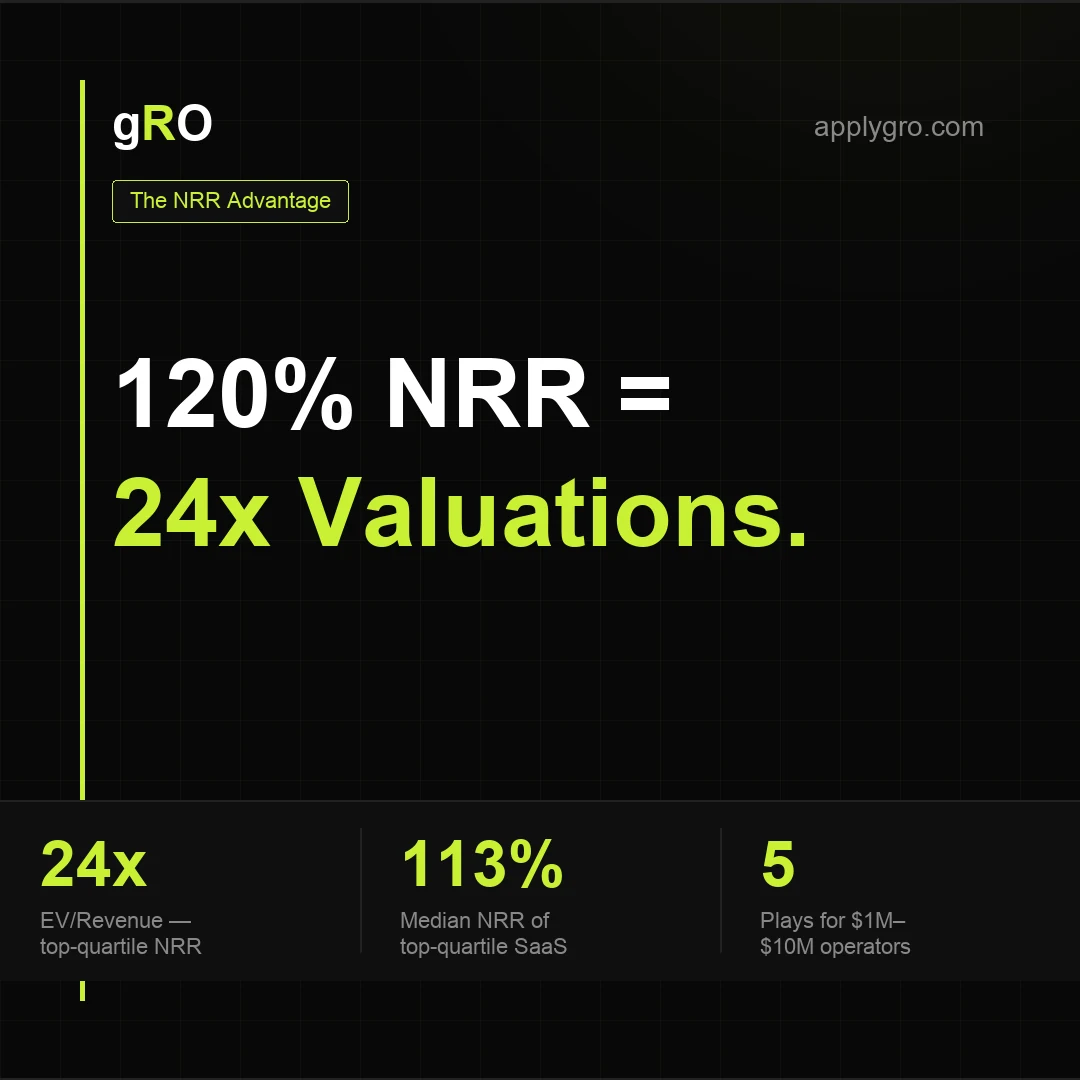
How 120% NRR SaaS Companies Get 24x Valuations.
McKinsey decoded for operators. Top-quartile NRR B2B SaaS trades at 24x revenue while bottom-quartile sits at 5x. The 9 practices, the 5 plays, and the operator playbook. Includes the 7-minute video.

Your Best Prospects Are Already Your Customers.
Why 80% of B2B FinTech marketing budget goes to acquisition — and what doubles when you flip it.

13% of Buyers Are Loyal. The Rest Are Shopping.
87% of B2B buyers are evaluating alternatives right now. Being in the first mental shortlist makes you 2× more likely to win.