Startup Economics 2026 — The Data Behind the Decade's Reset
2025 set every venture-funding record on the board — and almost none of it reached the typical $1M–$10M ARR SaaS company. This series reads the 2025–2026 startup data the way an operator does: not as headlines, but as a map of where the market actually pays, where companies actually die, and where the next dollar actually compounds. Every figure is sourced — Crunchbase, Angel Capital Association, SaaStr, GrowthList, Mercury. Start with the funding-records piece for the macro frame, the headcount piece for what valuation actually rewards, or the efficiency-reset piece for how the market repriced growth in a single year.
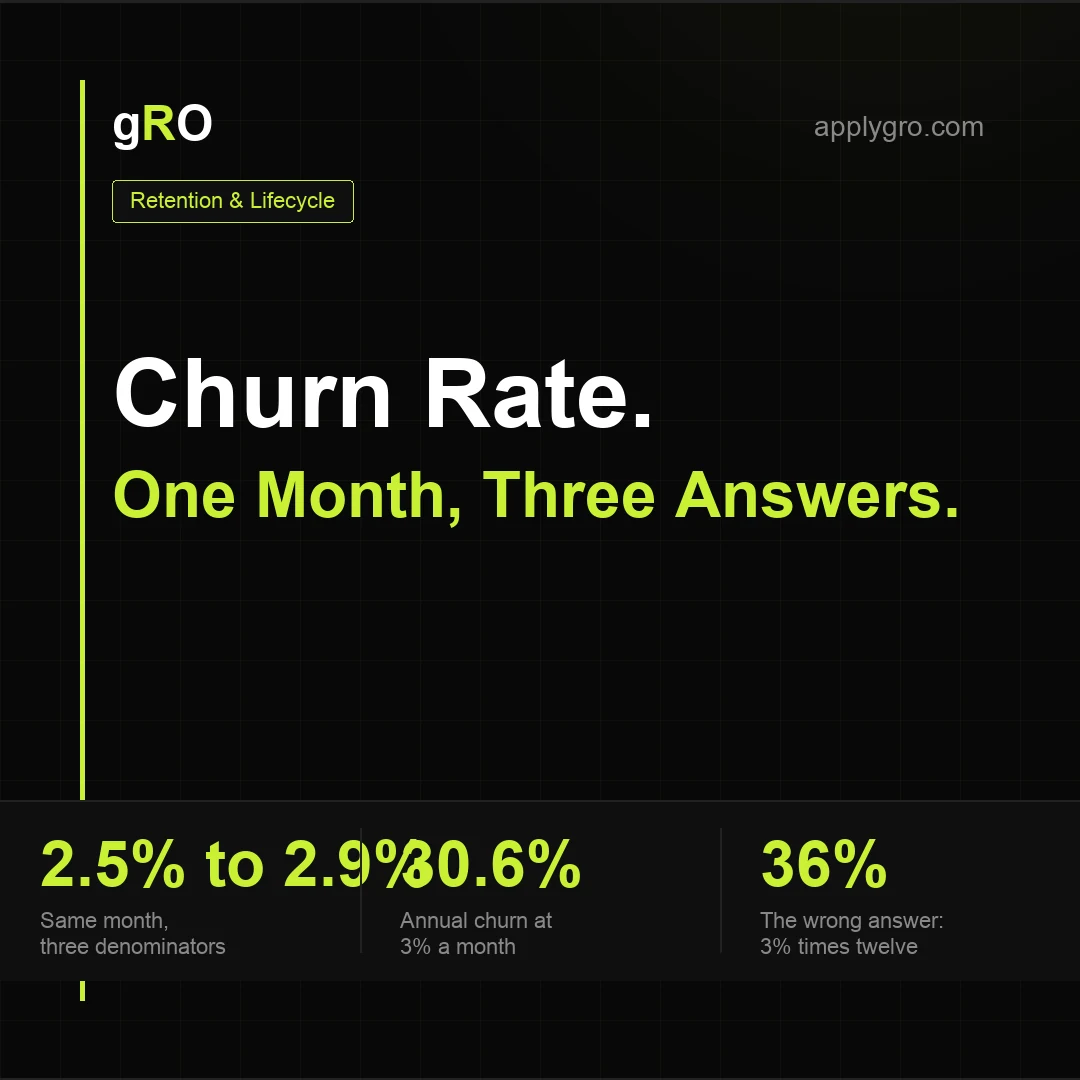
Churn Rate: What It Means and Why One Month Has Three Answers.
Customer churn rate is the share of paying customers lost over a period, but the same month gives different answers under different denominators. The formula, a worked example with three methods, cohort churn, monthly to annual conversion, and the edge cases to settle first.
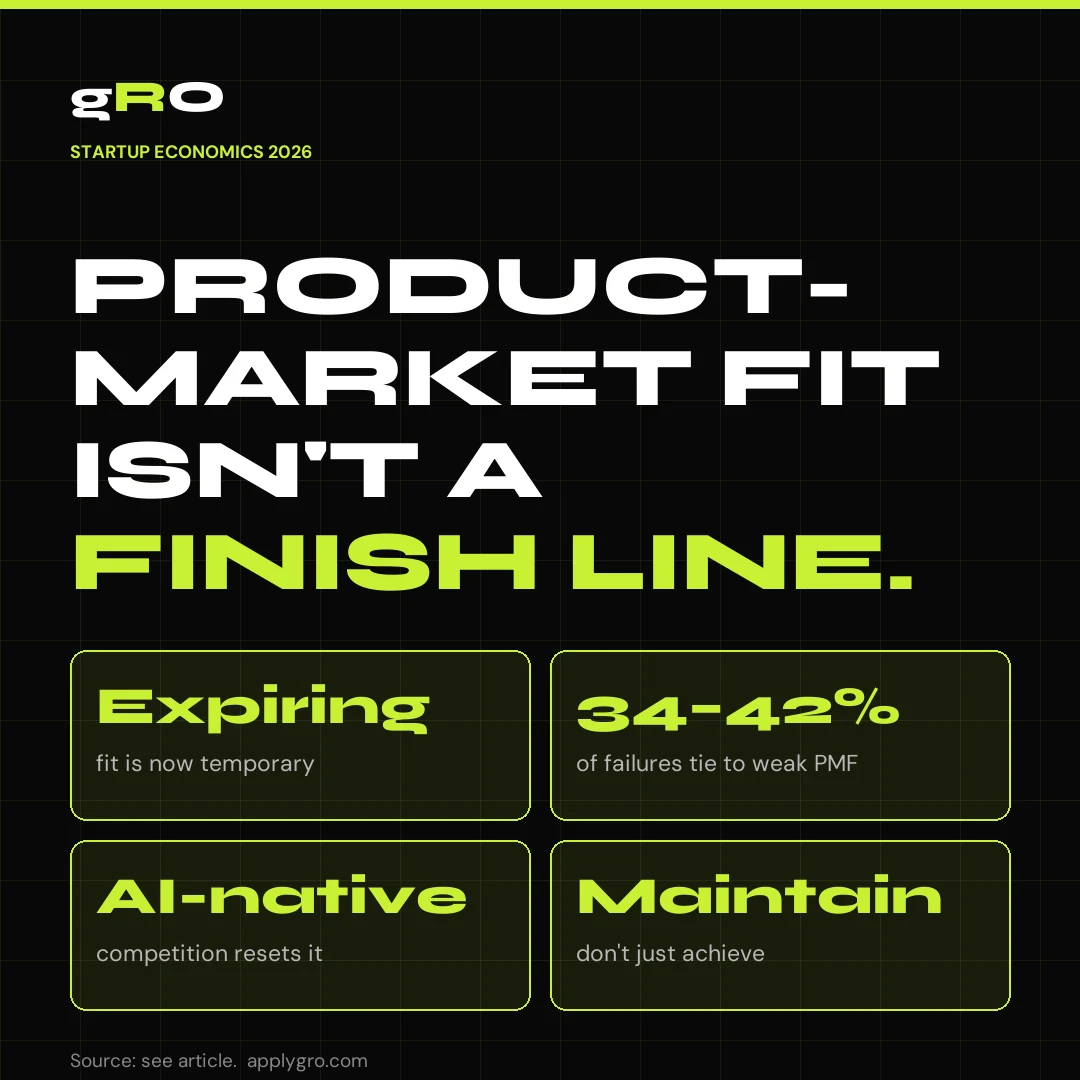
Product-Market Fit Isn't a Finish Line.
You were taught to find PMF once and protect it. In 2026 that model is breaking — fit is a temporary state that expires as AI-native competition resets positioning. Why PMF is now a maintained position, re-earned every quarter.
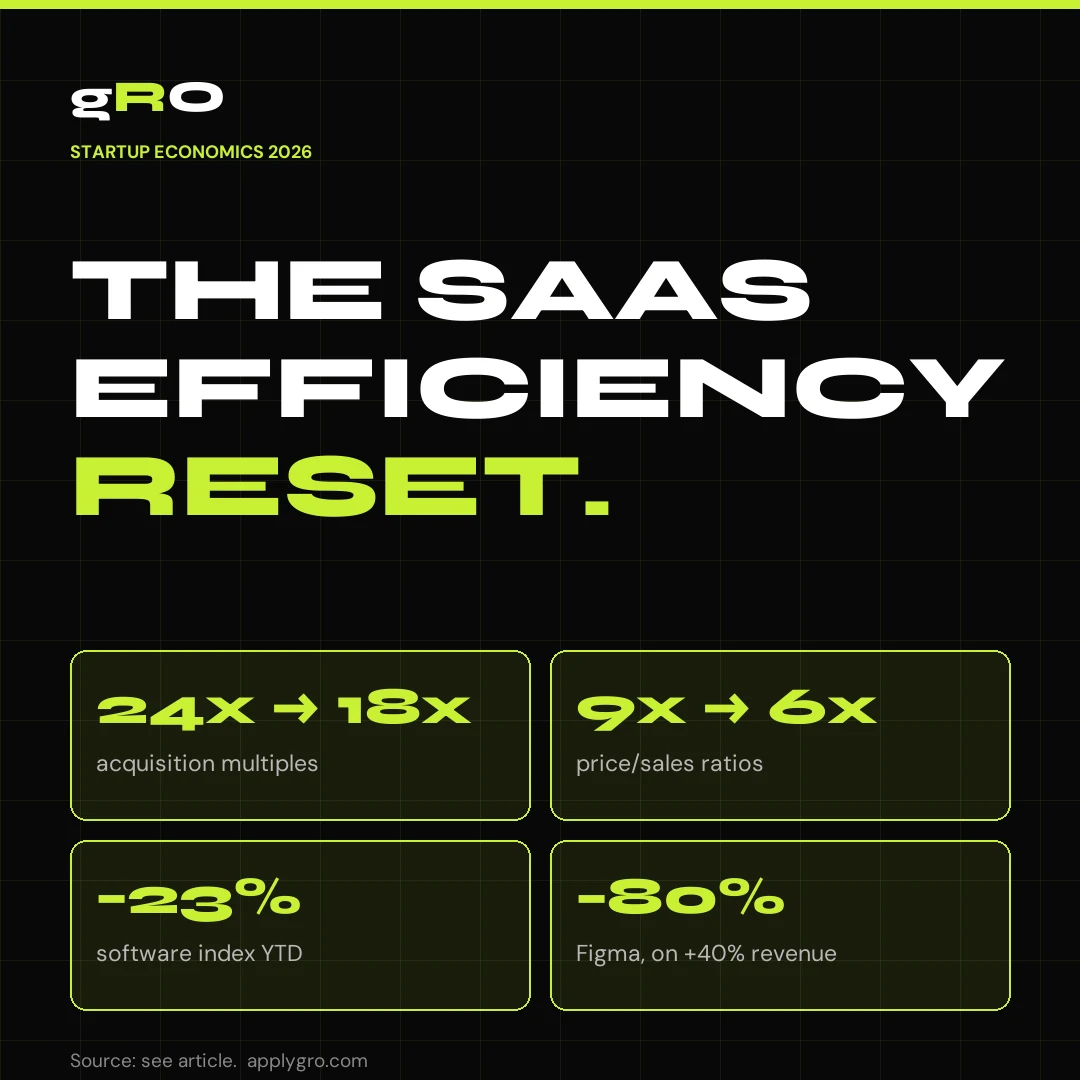
The SaaS Efficiency Reset.
SaaS multiples fell 24x→18x; price/sales compressed 9x→6x; Figma dropped 80% while growing revenue 40%. The market changed the question from how fast you grow to how efficiently. Where your next dollar compounds now.
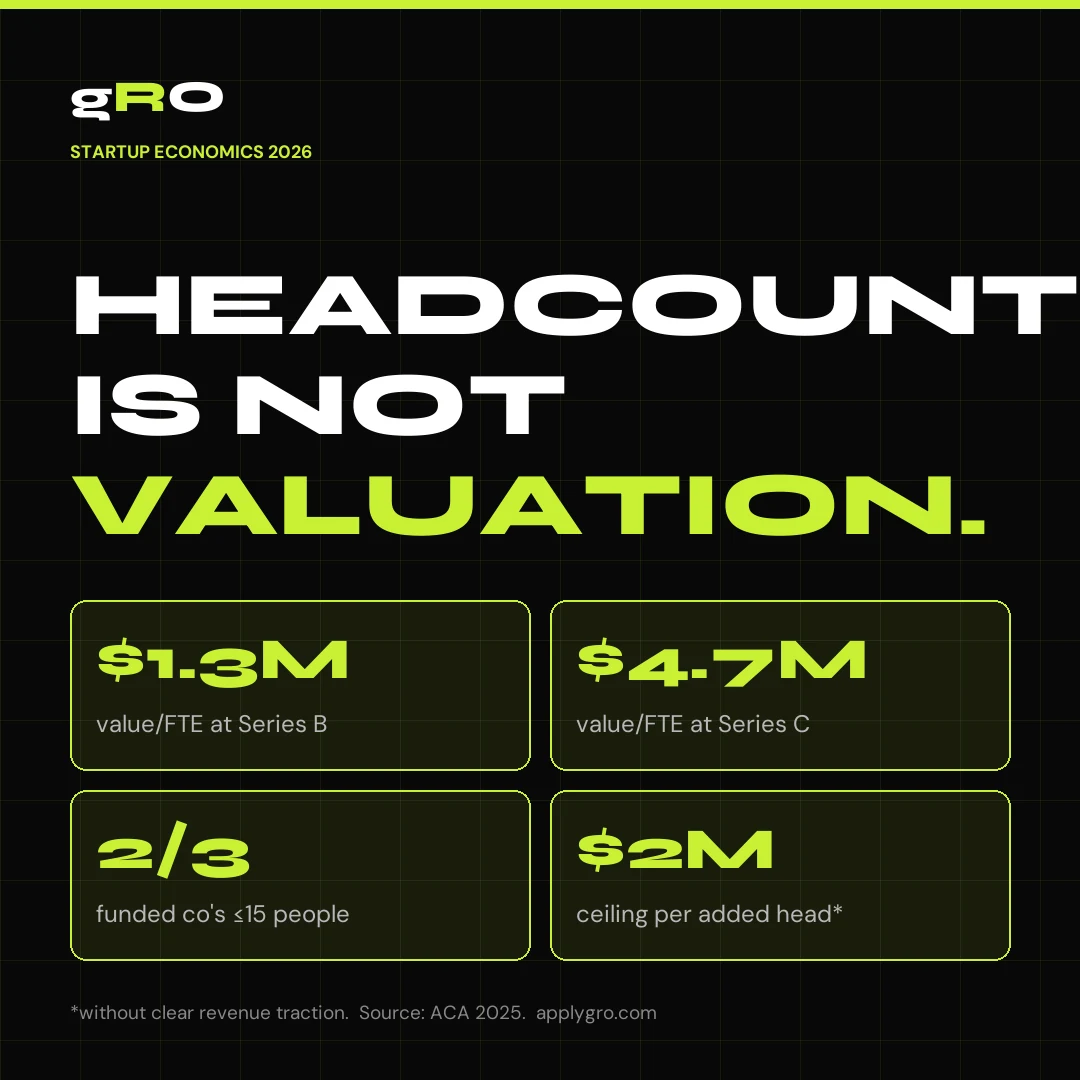
Headcount Is Not Valuation.
Angel investors funded ~1,000 startups in 2024. Valuation per employee is flat until Series C, dips at Series B as companies bulk up on go-to-market hires, and two-thirds of funded companies run on ≤15 people. The market prices output density, not headcount.
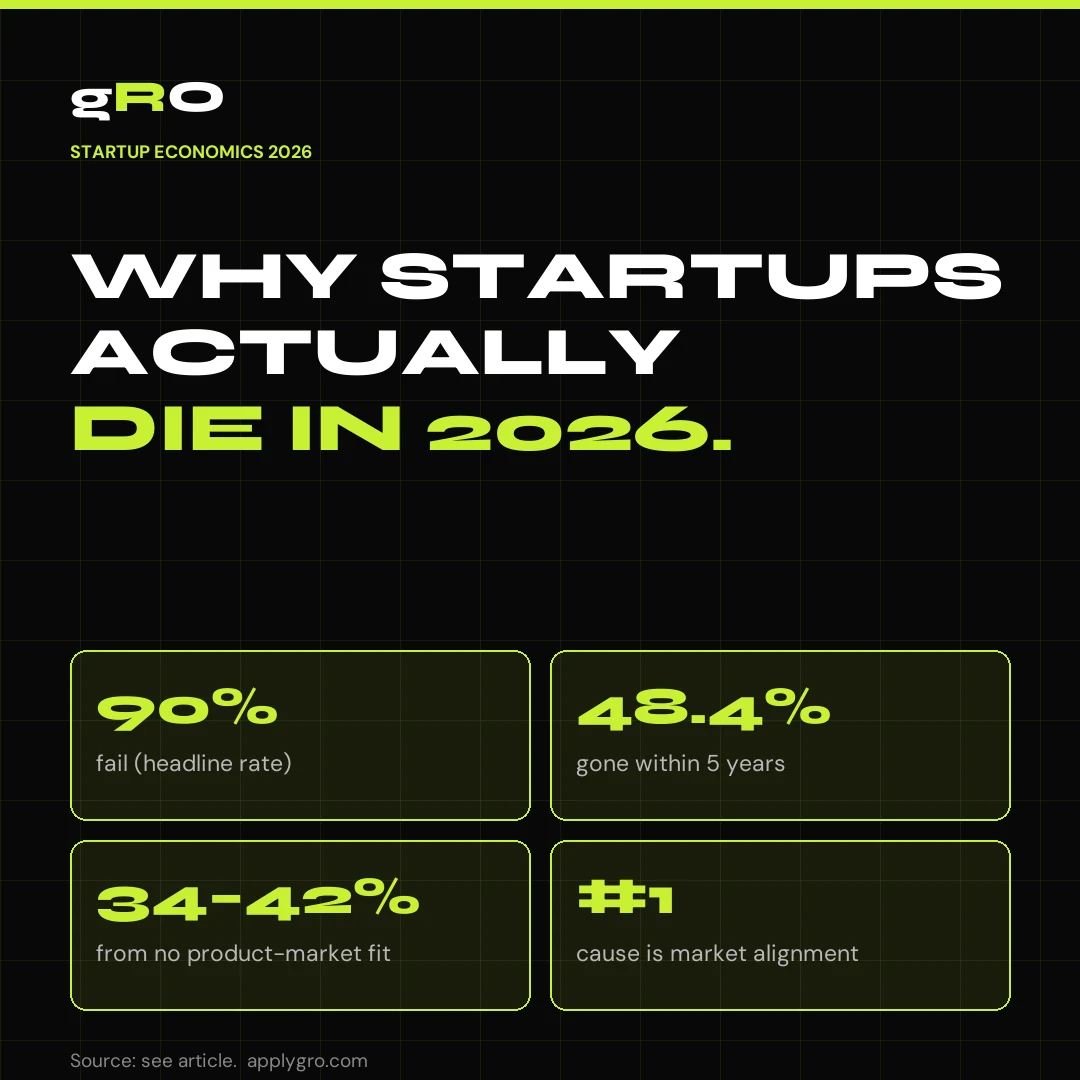
Why Startups Actually Die in 2026.
The autopsy almost never reads "couldn't build it." 90% fail; 48.4% within five years; no product-market fit is the #1 cause (34–42%). Startup death is a go-to-market problem wearing a product costume — and most of it is preventable.
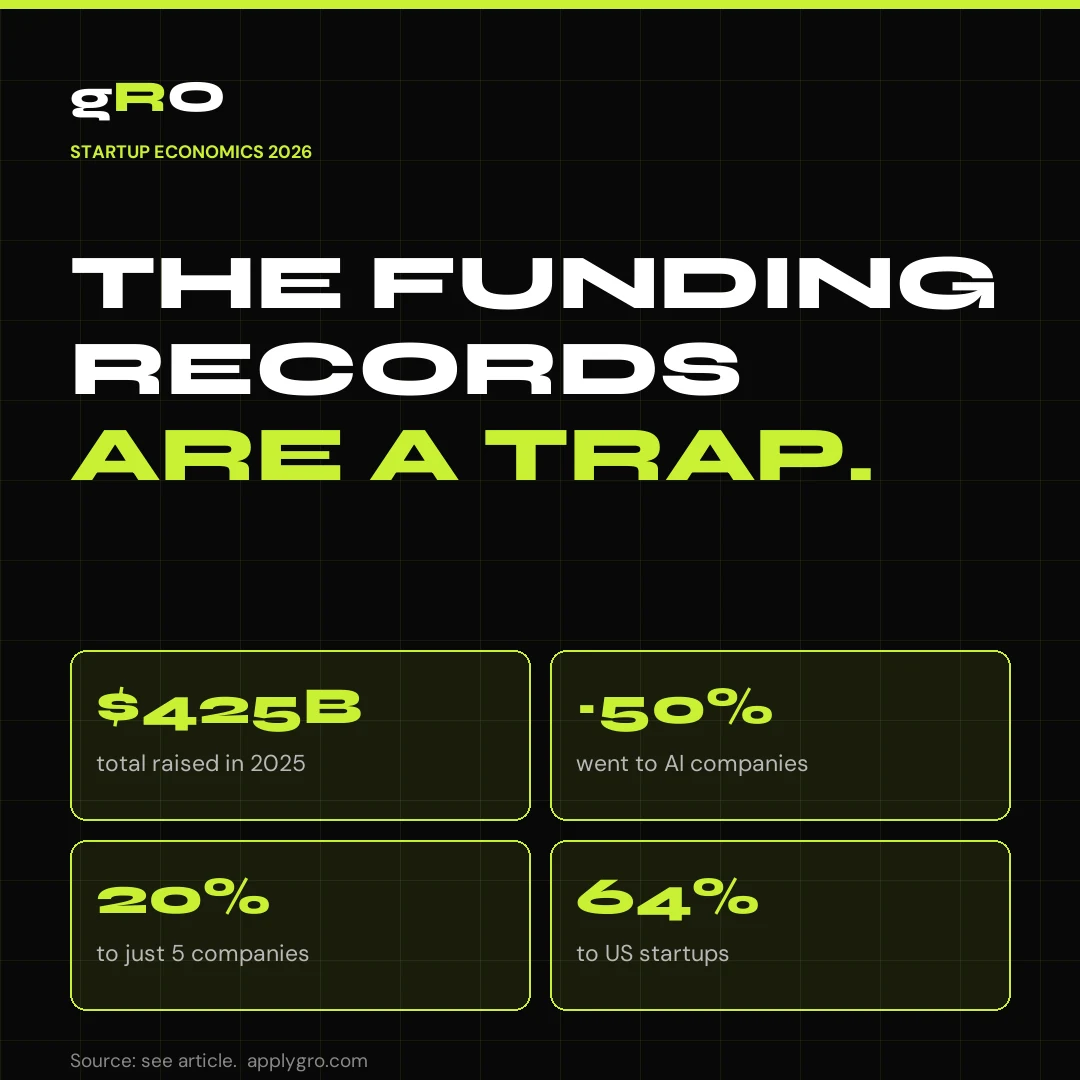
The Funding Records Are a Trap.
2025 set every venture record — $425B deployed, the largest round in history, ~50% to AI, 20% to five companies. For a $1M–$10M ARR founder not raising a $40B AI round, those records are a mirage. The market you actually operate in repriced down 24x→18x.

The Market Stopped Pricing Your Headcount.
Top-quartile B2B SaaS runs ~$279K ARR per employee vs a ~$141K median, and the median jumped ~29% in a year. Output density, not headcount, now sets your valuation.